Mindfulness Training Online – Experience Art and Mindfulness
 These days you might have read or heard a lot about mindfulness, but it was only through our meditation teacher that I learned that mindfulness can be incorporated together with making art! Laury Rappaport introduced this concept in 2009, which brought to light a new form of therapy, mindfulness-based art therapy.
But before you continue you might like to consider our free worksheet on exploring “Finding Joy In Life”. Please download this worksheet here.
In This Article:
What is Mindfulness-Based Art Therapy (MBAT)
Mindfulness
Mindfulness-Based Stress Reduction (MBSR)
Art Therapy
Mindfulness-Based Art Therapy (MBAT)
How is MBAT done?
Appreciating artwork through mindfulness
Step 1: Try to stay clear of distractions
Step 2: Note your thought and reactions
Step 3: Dive on the details
Step 4: Take your time and try it on another artwork
What is Mindfulness-Based Art Therapy (MBAT)
Through a mindfulness certification program I encountered MBAT. Mindfulness-based art therapy is rooted in four concepts: mindfulness, art therapy, mindfulness-based stress reduction (MBSR), and mindfulness-based art therapy itself.
Mindfulness
You may have been aware and heard of mindfulness, especially in association with meditation practices. The idea of mindfulness originated from Buddhists’ concept, which focuses on reflection and an awareness of physical sensations, emotions, and a consciousness of the present. When practicing mindfulness, you enhance your ability to reflect and recognize your self-awareness and improve your capability to reflect on your daily life and experiences. There are mindfulness training online course that you can check out if you want to learn more about it
Mindfulness-Based Stress Reduction (MBSR)
MBSR is a therapeutic approach that uses mindfulness in helping clients regard and asserts their situations from the point of acceptance and total awareness. This can be explained as a technique used in enhancing one’s understanding of their emotions, inner values, and ideals. MBSR uses meditation practices and body scanning activities. You can learn more mindfulness meditation and body scanning activities through mindfulness certification trainings which can also lead you to a profession as a meditation teacher.
 Art Therapy
Art therapy was popularized in 1940 as a kind of treatment that uses art as a tool or part of psychotherapy or an approach in giving medicine. The following explains it better.
- In giving art therapy, a client/you create art to release and identify the feelings, thoughts, and emotions you are keeping inside you.
- Using art as part of psychotherapy, a therapist analyzes the art a client/ you created to have a good idea of your psychological issues, thoughts, emotions, and perspective.
Mindfulness-Based Art Therapy (MBAT)
MBAT uses mindfulness concepts together with art therapy in the form of a therapeutic approach. Laury Rappaport first coined and proposed this kind of treatment that combines the concepts of mindfulness inside an art therapy setting. To simplify in words, this is a process of creating art in a mindful manner, which helps you discover your thoughts and emotions as you are doing it. Although the treatment’s effectiveness is still in the process of accumulating research-based evidence, it has already gained attention and recognition on studies that using treatment and control groups. This therapy is also known as “focusing-oriented art therapy,” emphasizing the need to shift focus as part of the creative experience. When Rappaport proposed this concept, she included Eugene Gendlin’s theory on focusing. Gendlin’s approach revolves around his observations that clients who had the most improvement in therapy were attuned to their inner physical self. This is where the concept of mindfulness-based art therapy revolves: creating a connection from one’s imagination to the physical body; while letting oneself express their feelings that one cannot put into words.
How is MBAT done?
Mindfulness-based art therapy is usually given in a therapy setting, but many of these activities can be done at home. The following are just some of the mindfulness-based art therapy techniques to provide you with an idea if you want to experience and try this kind of therapy. Studies on mindfulness show that it has a lot of psychological benefits. You may want to try practicing mindfulness through art! Here are just some ways for you to do it. A mindfulness certification program although may not be the right platform if you want to practice MBAT as you would need a psychotherapy background to truly practice it. But even a mindfulness training online is enough if you wan to be a mindfulness practitioner.

- Start with yourself. Mindfulness orbits around the idea of acceptance, and creating a drawing of yourself is just one way for you to start the process of acceptance. You can spend time and try to make it as realistic as possible, together with accepting your “flaws” that you may see. It is a good practice of physical acceptance and your drawing capabilities. Don’t look and judge your drawing from someone else’s eyes!
- Try out different art materials mindfully. Gather all the art materials you have available and try to look at them mindfully through your senses. Notice the thickness, texture, color, weight, and smell. Enjoy the sensory stimulation that you experience using them and when looking at other art forms that you may encounter!
- Express your emotions through art. As you try to make your art, try to incorporate your feelings into it, channel into how you create your strokes, lines, and texture the emotions you have. Express any happy or bad events from your day or week through your art. Access those experiences and present them in your piece. This can help you bridge and recognize your hidden emotions and needs that you find so hard to express in words.
- See your pain. If you have chronic pain physically and emotionally, look at how it changes before, during, and after art creation.
- Crawl and Walk Painting. Try to paint using the bottoms of your feet or your hands by walking or crawling on paper. You can even do it as a group or with a partner. Have fun!
- Try collage. Cut out from old magazines, newspaper, and brochures and try to express your current feelings and emotions through different materials
Step 1: Try to stay clear of distractions
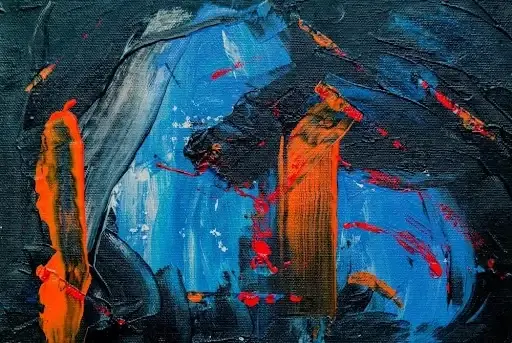
To start art mindfulness, you might want to put your phone away first, put it on silent or set an amount of time for your mindfulness practice. You can do selfies and look at your messages later on. Now to start, try to look for a piece of art that you want to fixate on, let your everyday thought fade away, all the worries left behind for a moment. For beginners who has not experienced meditation, this maybe hard to achieve fast. A technique that is usually done in meditation practices is a focus on your breath, on the inhales and exhales. The same goes for art as a medium of focus, you focus on a single piece of art. Just that one piece without anything else. Let your eyes look the individual colors, textures, the lightness, darkness, and brushstrokes. Immerse your senses on it.
Appreciating artwork through mindfulness
If you’re not comfortable making art, you can still practice mindfulness by appreciating art through the four steps from The Rubin. This is best practiced when you are inside art spaces and looking at different kinds of art.
Step 2: Note your thought and reactions
Try to be aware of what you felt and thought when you first saw the art piece. What did you feel? What were your first thoughts? There people who finds calm when they look at art pieces of the waves and the shore. Art can stir up plenty of other emotions and thoughts too. Were you curious or amused or confused? Or sometimes you might not feel anything at all. It’s normal. No matter what you felt and thought, be it nothing at all, notice it and accept it without judging.
Step 3: Dive on the details
What were its features that caught your attention? Was it the smoothness of the sculpture, the thick brushstrokes and textures? Look more into it and discern why it intrigues you. This can give a deeper meaning of the artwotrk for you, or it might just be a great discovery for you! Remember that there is no wrong answer for your curiousities.
Step 4: Take your time and try it on another artwork
Slow down and focus on single piece first. Try to use these techniques on every artwork that you see. Whenever you feel like the noise, the chatter and sounds are distracting you, recognize the distraction then just go back to the mindfulness practice. Don’t be too hard on yourself when you get distracted. Let yourself just be aware of the distractions but put your full attention to the piece. Repeat.

Although a mindfulness training online is enough for you to teach mindfulness, you may need to have psychotherapy background to use MBAT for therapeutic purposes for psychological issues. Having knowledge on how to incorporate and teach mindfulness through accredited mindfulness training programs is a good way to use it for enriching personal and social relationships and even Google uses it for workplaces!
Looking to deepen your mindfulness practice through art? Download our Finding Joy In Life Workbook to explore how creative expression can enhance your mindfulness journey. This workbook will guide you in using art to connect with your emotions, foster self-acceptance, and experience the therapeutic benefits of mindfulness-based art therapy (MBAT). Start embracing your creativity and mindfulness today!