
How to quiet your inner critic

How to quiet your inner criticIt’s tough out there. The world is constantly judging you and your work. You feel like you should be able to do better, and it feels like everyone is looking down on you.

And then, when you finally get something done, there’s that little voice in the back of your head that keeps saying “you could have done better.” If this sounds familiar, it’s time to take a deep breath and quiet your inner critic. It’s not helpful and it will only hold you back from achieving your goals. Instead, learn how to trust your creative

instincts and let them guide you. With practice, you will eventually learn to silence that nagging voice and reach your goals.

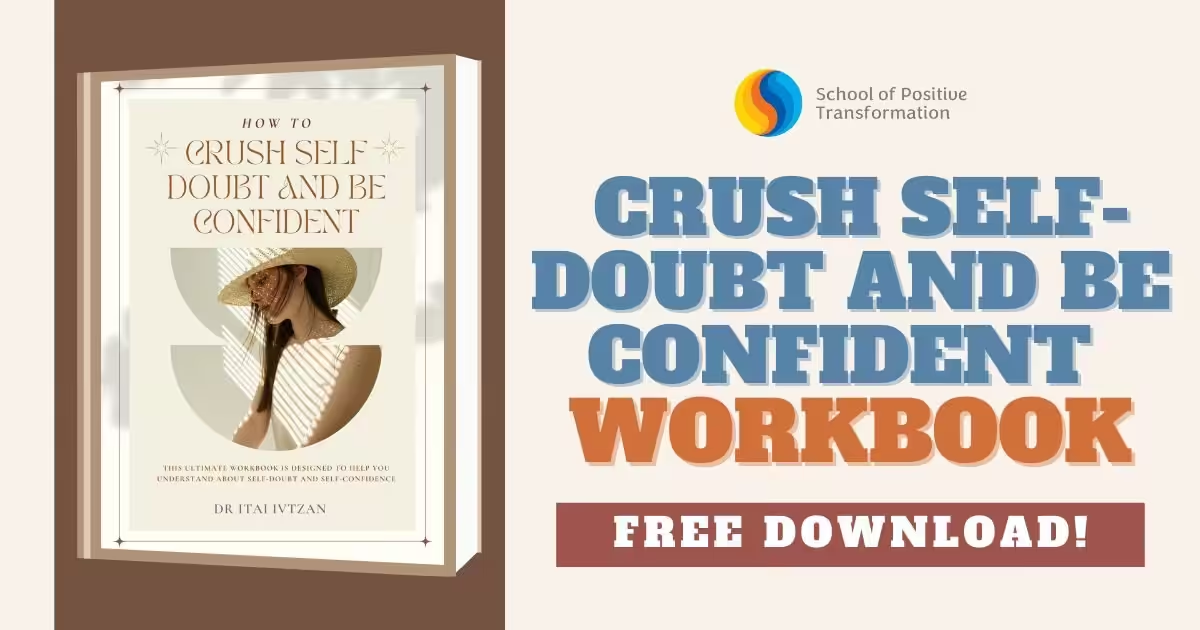
But before you continue you might like to consider our free worksheet on exploring “Crush Self-Doubt and Be Confident”. Please download this worksheet here.

Recognize the voice in your head

If you’ve ever had a critic in your head, you know how hard it can be to silence them.

They’re persistent, convincing and often inaccurate. Recognizing the voice of your

critic can be a challenge, but it’s important to remember that they’re not always right.

First, try to understand why the critic is talking to you. Maybe they’re concerned about your well-being or want to help you achieve your goals. But if the critic is constantly critiquing everything you do, it may be time to start questioning their motives.

Once you know what kind of criticism is coming from your critic, it’s important to respond in a way that benefits you rather than harms yourself. For example, if the critic is telling you that you can’t do something because you don’t have enough

experience or skills, tell them what resources (books, websites, etc.) are available to help you learn more about the topic.

If the criticism keeps getting in the way of your success, it may be time to get rid of

the critic altogether. There are many resources available for dealing with inner critics and hopefully one will help reduce the frequency and severity of negative thoughts.


Practice self-compassion

Self-compassion is a type of compassion directed towards oneself. It can be beneficial in reducing anxiety, depression, and stress, as well as improving self-esteem and

self-awareness. To practice self-compassion, begin by acknowledging your feelings without judgement. Then try to relax your body and mind, focus on your breath, and repeat positive statements to yourself such as “I am feeling right now” or “I am capable of .”

Connect with others to find support

If you’re feeling overwhelmed by self-judgement and negative thoughts, it might help to connect with others who are also struggling. Online groups or forums can provide a safe space for you to share your experiences and receive support from others.

Set realistic goals

  1. Start by writing down the goals you want to achieve.
  2. Set realistic expectations for yourself and be honest with yourself about your abilities.
  3. Be patient with yourself, and don’t expect immediate results.
  4. Celebrate your successes along the way!

Stay positive even when things get tough

You can fight back against negativity by remembering these five tips:

  1. Recognize when your inner critic is trying to control you. It’s important toremember that your inner critic is only trying to make you feel bad about yourself. When you start to listen to this negative voice, it becomes easier for it to take over your thoughts.
  2. Remind yourself that there are other people out there who care about you. Even when everything else in the world seems bad, remember that there are people who love and care for you. This will help you keep your faith in the best possible way.
  3. Take some time for yourself every day. When things are going tough, it can be easy to forget about yourself and focus on everything else going on around you. Make a commitment to take some time for yourself every day and do something that makes you happy – even if it’s just taking a short walk outside!
  4. Believe in yourself even when others don’t believe in you. Even though life may seem difficult at times, remember that YOU have the ability to change anything and everything in your life for the better! Don’t let others’ opinions get the better of you – remember who YOU are and what matters most.

Love yourself

Conclusion

If you have a nagging voice in your head that keeps saying “you could have done

better,” it’s time to take a deep breath. There are many resources available for dealing with inner critics and hopefully one will help reduce the frequency and severity of negative thoughts. Quieting your inner critic can be a difficult task, but essential for success in any area of life.

When things are going tough, it can be easy to forget about yourself and focus on everything else going on around you. But you can fight back against this negativity by remembering these five tips. Remember who you are, what matters most and how much you have to give.


Are you ready to take control of your inner critic and build lasting self-confidence? Download our “Crush Self-Doubt and Be Confident Workbook” for free here and start silencing those negative thoughts to unlock your full potential today!
WAIT!

Before you go, we'd like to give you a FREE workbook to support your journey 👇

Smiling woman with wavy brown hair wearing a navy blazer and white shirt, standing in a softly blurred office setting, conveying positivity.

Carolyn Freyer-Jones

Kickstart Your Coaching Practice

Highlights & Achievements:

Coach, facilitator, and contributor to coaching education. Carolyn is associated with practical coaching training and learning resources, supporting coaches and leaders in developing effective, ethical, and reflective coaching practices.
Man in a light blue shirt smiles gently at the camera. He has short, dark hair and stands against a blurred indoor backdrop, conveying warmth and approachability.

Rob Willson

Cognitive Behavioral Coaching

Highlights & Achievements:

Coach and educator contributing to leadership and coaching skills development. Rob is involved in professional training contexts, supporting the application of coaching tools and methodologies in organisational settings.
A woman with shoulder-length blonde hair is confidently posing with crossed arms. She wears a black and white checkered outfit and a necklace. The background is softly blurred, suggesting an indoor setting.

Prof. Ilona Boniwell

Positive Psychology Coaching

Highlights & Achievements:

Professor of Positive Psychology and Coaching Psychology. Ilona is a pioneer of applied positive psychology education in Europe and has founded and led postgraduate programmes in the field. Her work focuses on wellbeing, resilience, strengths, and evidence-based positive psychology interventions.
A middle-aged man with short gray hair and a beard wears a white turtleneck and a navy blue striped sweater, standing confidently indoors.

Jon Williams

Coaching for Performance

Highlights & Achievements:

Coach and contributor to professional coaching education and training programmes. Jon is involved in leadership and coaching development initiatives, supporting skill-building and reflective practice within organisational and coaching contexts.
A man in a blue suit and light blue shirt, with curly blond hair, smiles softly against a blurred, bright indoor background, conveying professionalism.

Prof. Erik de Haan

Relational Coaching

Highlights & Achievements:

Professor, executive coach, and leading expert in coaching supervision. Erik is widely recognised for his contributions to relational coaching, organisational development, and reflective practice, supporting both individual coaches and leadership systems worldwide.
Elderly man in a dark suit and striped shirt smiles warmly, standing in a bright, blurred background. The tone is professional and approachable.

Prof. Peter Hawkins

The Coaching Relationships

Highlights & Achievements:

Professor of Leadership and a leading authority in systemic team coaching and coaching supervision. Peter works internationally with boards, leadership teams, and organisations, and has written extensively on leadership, coaching culture, and systemic change.
Smiling older man in glasses and a light pink shirt sits indoors, with a softly blurred background of a modern, brightly lit office space.

Prof. David Clutterbuck

Goals

Highlights & Achievements:

One of the world’s most influential figures in coaching and mentoring. Professor Clutterbuck has authored and co-authored foundational texts in coaching, mentoring, and organisational development. His work has shaped global standards for coaching practice, supervision, and mentoring relationships.
A bald man in a dark, buttoned shirt with patterned cuffs stands indoors. He smiles subtly, with a bright, blurred background, exuding a calm, confident presence.

Devon White

Communication

Highlights & Achievements:

Coach and leadership development practitioner involved in contemporary coaching education. Devon has contributed to professional coaching programmes and discussions alongside established academics and practitioners in the coaching field.
Smiling woman with short auburn hair wearing a black dress and polka dot jacket. She stands confidently in a bright, blurred office setting.

Linda Aspey

The Coaching Relationships

Highlights & Achievements:

Coach, facilitator, and contributor to professional coaching education. Linda is recognised within the coaching psychology and leadership development community for her involvement in learning programmes, events, and reflective coaching practice.
A woman with short white hair smiles confidently, wearing a red blazer with a popped collar. The background is softly blurred, creating a warm, professional ambiance.

Dr. Chérie Carter-Scott

Psychological Foundations

Highlights & Achievements:

Executive coach, author, and pioneer in the coaching profession. Often referred to as “The Mother of Coaching,” Dr. Carter-Scott has been a leading voice in personal and professional development since the 1970s. She is a bestselling author and has trained coaches and leaders worldwide in motivation, leadership, change, and self-esteem.
Smiling man in suit with colorful tie stands in bright, blurred office. Hands clasped, he exudes confidence and warmth.

Prof. Jonathan Passmore

An Introduction to Coaching

Highlights & Achievements:

Chartered Psychologist, Professor of Coaching and Behavioural Change, executive coach, and author. Jonathan has published extensively in coaching psychology, leadership, and organisational change, including numerous academic articles and books. He bridges academic research and applied practice, contributing globally to coach education and evidence-based coaching.
Smiling man in a black suit and white shirt stands against a softly blurred, bright background. The atmosphere is professional and approachable.

Dr. D. Ivan Young

The Coaching Relationships

Highlights & Achievements:

Coach, educator, and thought leader in professional and relationship-focused coaching. Dr. Young is frequently featured alongside senior coaching scholars and practitioners in advanced coaching education and professional development settings, contributing to the evolution of reflective and relational coaching practice.
Smiling woman with short red hair wearing a blue blouse and earrings, standing in a softly blurred indoor setting, conveying a warm, professional tone.

Catherine Bell

Psychological Foundations

Highlights & Achievements:

Professional Certified Coach (PCC) and Master of Applied Positive Psychology (MAPP). Catherine specializes in leadership transitions, executive presence, and sustainable performance. Her work combines positive psychology, emotional intelligence, and strategic leadership development to help leaders thrive while maintaining wellbeing and purpose.
Smiling man in a navy blazer and shirt stands confidently with hands in pockets. The backdrop is a softly blurred office environment, conveying professionalism.

Yannick Jacob

An Introduction to Coaching

Highlights & Achievements:

Existential Coach, Positive Psychologist, Coach Trainer, and Supervisor. Yannick is the Programme Lead for the Accredited Certificate in Integrative Coaching at the School of Positive Transformation. He has taught coaching, positive psychology, and personal development at institutions including the University of East London, Animas Centre for Coaching, and The School of Life. His work integrates existential philosophy, coaching psychology, and human development to support meaningful change in individuals and leaders.

Highlights & Achievements: