5 Benefits of Walking Meditation
 One of the most straightforward approaches to meditation that I learned from my meditation teacher training is walking meditation. If meditation was introduced to me first in this manner, I bet I would have started practicing years ago! The most popular thought about meditation is that you have to sit in a quiet corner, cross your legs while sitting, and chant “Om.” I bet that’s the first image of meditation that you have when you hear the word. As someone who is always sitting (due to work), I would love to do other activities that do not involve sitting long. A mindfulness coach has recommended walking meditation to help in circulation and those who feel challenged by seated meditation practice.
Before moving forward, you may find it helpful to explore our free worksheet on uncovering “Medication Guide.” You can download the worksheet here.
What is Walking Meditation?
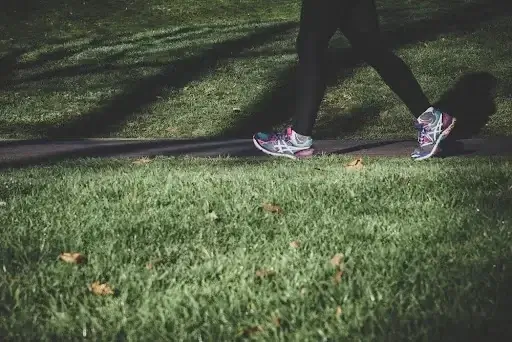
This is also called mindful walking, and like the other meditation practices that you may learn, read, or have heard about, walking meditation is a practice for you to be consciously aware — while you are moving and have lots of visual, auditory, and other sensory stimuli in the environment. It is a practice that lets you enjoy the walking activity and a great way to learn and practice meditation for beginners. For this meditation practice, the walking motion is your point of focus, and a means for you to be more aware of your body and your inner thoughts.Your whole meditation is about walking. This is truly one of my favorite mindful practices that I learned from the meditation teacher training program. This is a good practice of moving despite having no particular intention or goal! It means to walk with an awareness of your steps, thoughts, breath, and emotions and to accept them.
 Note that you don’t need to have trees or a country-feel around you to focus! You can meditate even in the midsts of the city’s hustle and bustle! Even our meditation teaching encourages us to use these sounds and the clutter of stimuli around you to help you be aware of yourself, your body, thoughts, emotions, and feelings. The following are the benefits of walking meditation:
1. It engages your senses more and creates a deep connection to your environment.
The common meditation practice (even in other forms of meditation taught in out meditation teach training program) in which you are seated uses Pratyahara or sense withdrawal. On the other hand, walking meditation actively engages and makes use of all your sense as you walk. Mindful walking is about being aware of the following:
- The path you are walking into beneath your feet, the cobblestones, sand, cement, soil
- The quality, temperature of the air that you inhale and exhale
- The sights that you see ahead
- The sounds that you hear around
- The tastes that you might even encounter as you walk
- The thoughts that go into your head
This sensory engagement creates a more profound sense of connection to your environment. You realize that you are a part of a bigger picture. This stimulates awareness of situations around rather than focusing on your surroundings and walking mindlessly.
2. A Good Distraction
Getting up to take a walk is one way for you to clear your train of thought. Leave that mental clutter for a while to breathe and shift your awareness other than your tasks to get you a fresh perspective. It may even improve your motivation, creativity, and productivity. Our meditation teacher encourages us to take quick walks even on our busiest days when we feel like we don’t have time for our meditation practices.
 3. Attuning With Your Environment And Your Body
Mindful walking is a great way to attune with the environment and your body. Although you could do walking meditation without all the trees and grass, an expanse of greenery and fresh air is an excellent setting for you to commune with nature. Nature can be a good source of healing for your mind, soul, and body. Walking also attunes you to your own body, embracing it and being aware of how you carry yourself as you walk. Your breathing, posture, steps are uniquely yours . Being aware of yourself gives you a good insight into how you can move with greater comfort and ease.
4. It Slows You Down
Being mindful and conscious of yourself, thoughts and actions slow you down. And it’s a refreshing take, for we like to live our lives on the fast lane. Being careful and aware of your movements, you open up the chance to be graceful and act in measure and deliberate ways. Take a breather, pause. Enjoy the journey before the destination.
5. It Trains Your Concentration
Walking meditation is all about focusing on the movement of the walking itself. As easy as it sounds, it may be harder to focus entirely on the motion for walking is always entwined with distractions like traffic, other people, the weather, animals, buildings, plus add in your thoughts and popping ideas and worries. With continuous practice you will learn that these everyday distractions can be beaten by a good focus on walking. Remember that you don’t need to force yourself to think of nothingness you only have to learn how to be conscious of your thoughts but not really dwell on them.
“The mind can go in a thousand directions, but on this beautiful path, I walk in peace. With each step, the wind blows. With each step, a flower blooms.” ~ Thich Nhat Hanh Remember that walking meditation is about the act of walking, it’s not about getting on the destination. And the thing is you don’t really arrive anywhere. You only arrive at the present moment. The meditation teacher training program not only taught me about the common meditation practices but also of mindful activities that can act as alternatives in for our busiest days. Imagine a busy day at the office. When you think you have a lot on your plate and you can’t have a quick meditation practice on lunchbreak, take your time as you go from the first floor up to the third floor. Maybe even take your time as you walk from your lunch cafeteria to your desk. Now this may be truly hard because of acquaintances that you might encounter, but truly savor the moment of walking eve if it’s just a simple walk from your table to the coffee machine. It will truly make a difference, believe me. The Benefits of Walking Meditation give us an opportunity to remember the earth that sustain us and develop gratitude.
Ready to enhance your mindfulness practice? Download our free worksheet to explore more ways to deepen your awareness and focus through walking meditation.